Study in Germany
Free tuition at public universities in Europe's strongest economy
Why Study in Germany?
Top reasons students choose this destination.
Zero Tuition Fees
Most public universities charge NO tuition — only a semester fee of €100–€400
Engineering Excellence
World-renowned for engineering, automotive, STEM, and technical programs
2,200+ English Programs
428 universities with over 2,200 international programs taught in English
EU Blue Card
Clear path to permanent residency through the EU Blue Card system
Lowest Total Cost
Total annual cost of just ₹12.6L–₹14.4L — among the cheapest globally
Strong Job Market
Europe's largest economy with high demand for skilled international workers
Best Cities in Germany
Top destinations for international students to study, live, and build careers.
Munich
Germany's economic powerhouse and home to TU Munich and LMU Munich. Headquarters of BMW, Siemens, Allianz, and a growing tech startup scene make it the country's top city for graduate employment. While more expensive than other German cities, the quality of life, safety, and proximity to the Alps are unmatched.
Berlin
Germany's capital is Europe's startup capital with a vibrant international community. Home to Freie Universität, Humboldt University, and TU Berlin, the city offers an incredibly affordable cost of living for a major European capital. English is widely spoken in the tech and startup ecosystem, making it easier for international students to find work.
Heidelberg
A picturesque university town with Germany's oldest university (est. 1386), Heidelberg is a world-class research centre in life sciences, physics, and medicine. Strong biotech and pharma companies like BASF and Roche are nearby. Compact, safe, and affordable with a high student-to-resident ratio creating a true 'student city' atmosphere.
Aachen
A small city dominated by RWTH Aachen University, one of Europe's top engineering schools. Strong ties to the automotive industry (near Cologne and the Dutch/Belgian border) create excellent engineering internship and job opportunities. Very affordable and student-friendly with nearly 1 in 4 residents being a student.
Frankfurt
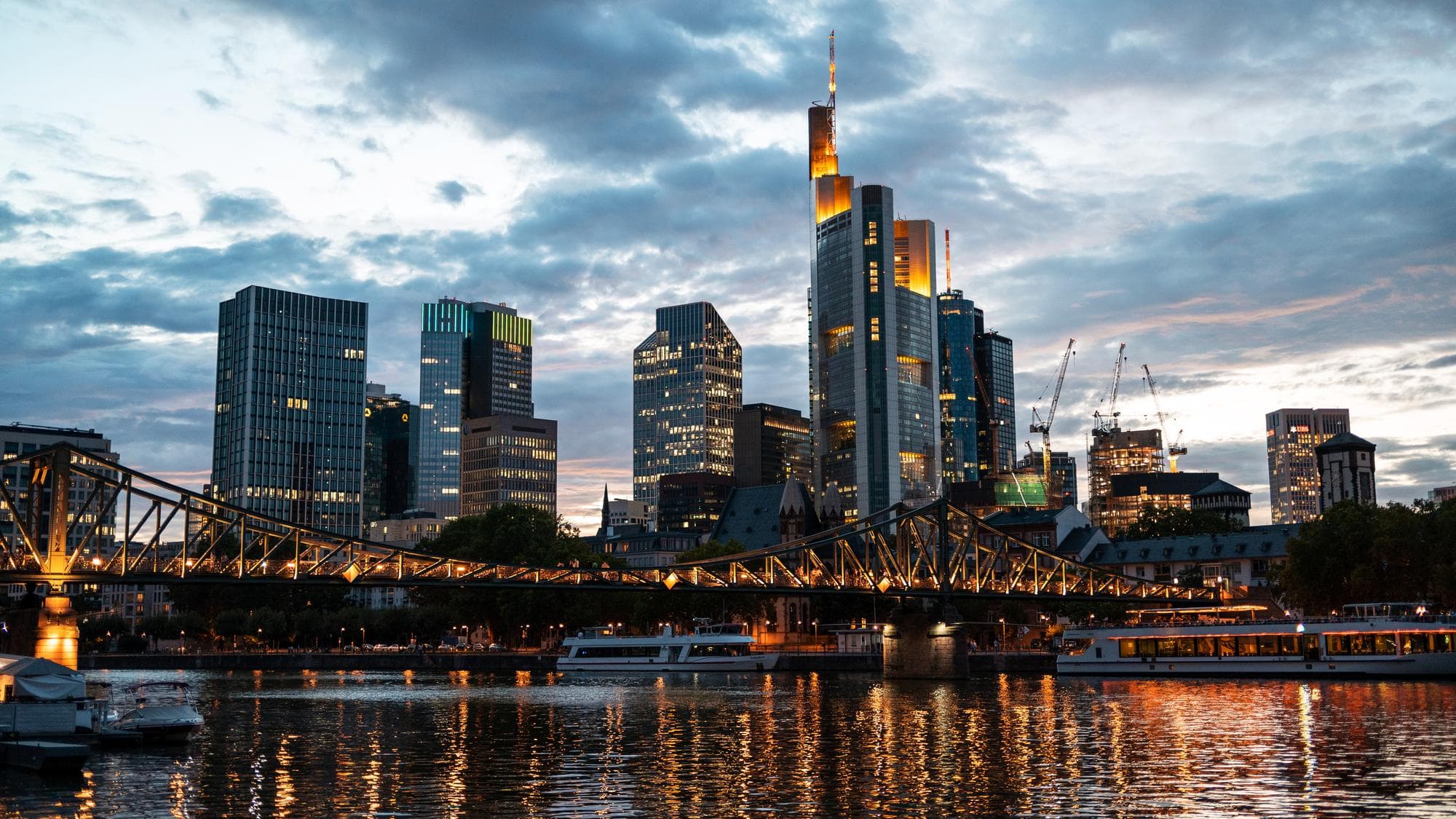
Europe's financial capital, hosting the European Central Bank and major banks like Deutsche Bank and Commerzbank. Goethe University Frankfurt and Frankfurt School of Finance offer strong business and finance programs. The city is Germany's most international and well-connected hub — ideal for finance and consulting career paths.
Stuttgart
The heart of Germany's automotive industry with Mercedes-Benz, Porsche, and Bosch headquartered here. The University of Stuttgart and surrounding research institutes offer world-class engineering programs. One of Germany's highest median incomes and lowest unemployment rates, though the cost of living reflects this prosperity.
Top Ranked Universities
Reputed institutions ranked by trusted global agencies.
QS World 2025
Technical University of Munich (TUM)
QS World 2025
Heidelberg University
QS World 2025
Ludwig Maximilian University of Munich (LMU)
QS World 2025
Freie Universität Berlin
QS World 2025
RWTH Aachen University
QS World 2025
Karlsruhe Institute of Technology (KIT)
QS World 2025
Humboldt University of Berlin
QS World 2025
Technical University of Berlin (TU Berlin)
Tuition Fee Ranges
Cost comparison by institution type — shown in both local currency and INR.
Public Universities (Universität)
₹8.3K–₹33.3K
€0 + semester fee €100–€400
- TU Munich
- RWTH Aachen
- Heidelberg
- LMU Munich
Baden-Württemberg Public
₹1.25L/semester
€1,500/semester (non-EU)
- Freiburg
- Stuttgart
- Karlsruhe
Universities of Applied Sciences
₹8.3K–₹33.3K
€0 + semester fee
- Frankfurt UAS
- Munich UAS
Private Universities
₹2.5L–₹16.7L
€3,000–€20,000/year
- ESMT Berlin
- WHU
- Jacobs
Employment
Work opportunities for students.
During Studies
120 full days or 240 half days per year of employment allowed.
After Graduation
18-month residence permit to find a job. EU Blue Card: requires €50,700+ salary. Settlement Permit after 27 months with Blue Card. New Opportunity Card (Chancenkarte) for returned graduates.
Expected Salaries
Average salary ranges by field.
Visa Process
Step-by-step visa application for Germany.
Get Admission
Receive admission letter from a German university
Open Blocked Account
Sperrkonto with minimum €11,904 (₹10.71L)
Get Health Insurance
Student rate ~€140–€160/month
Gather Documents
Passport, admission letter, blocked account proof, insurance, language certificate, transcripts
Apply at Embassy
German Embassy/Consulate in India (New Delhi, Mumbai, Chennai, Kolkata, Bangalore)
Pay Visa Fee
€75 (₹6,750)
Receive Student Visa
Valid for 3 months, then convert to Residence Permit in Germany
Estimated Expenditure
Breakdown of costs in both local currency and INR.
| Item | Local Currency | INR (approx.) |
|---|---|---|
| Tuition (public) | €0–€800/year | ₹0–₹72K |
| Blocked Account (living) | €11,904/year | ₹10.71L |
| Health Insurance | €1,680–€1,920/year | ₹1.51L–₹1.73L |
| Transport | €756/year | ₹68K |
| Visa Fee | €75 (one-time) | ₹6,750 |
| Total Per Year | €14,000–€16,000 | ₹12.6L–₹14.4L |
Chat with an NKE Alumni in Germany
Get real, first-hand insights from our students who are already studying or working in Germany. No sales pitch — just honest advice from someone who walked the same path.
Germany FAQs
Commonly asked questions about studying here.
For English-taught programs, no. But B1/B2 German is strongly recommended for daily life and career prospects.
Yes! Public universities charge no tuition (except Baden-Württemberg: €1,500/semester for non-EU). Only a semester fee of €100–€400 applies.
A special account where €11,904 is deposited. You can withdraw ~€992/month to prove you can support yourself financially.
Yes. 18-month job-seeking visa after graduation, then EU Blue Card pathway to permanent residency.
Winter Semester (October) is the main intake. Summer Semester (April) has limited programs.
Start Your Germany Application
Free assessment. Tell us a little about you and we'll continue on WhatsApp.
Ready to Study in Germany?
Book a free assessment and let us handle everything — from admission to visa.
Start Your Germany Application — Free Assessment